 Continuing...
Some of the Greatest Comic Book Stories Ever!
|
Continuing...
Some of the Greatest Comic Book Stories Ever! |
... Page 2
Continuing in no particular order...
"The Legion's Super-Secret / Trial of the Legion Five"
sc: Paul Levitz, Gerry Conway. art: Mike Grell, George Tuska (inks Vince Colletta) - Superboy and the Legion of Super-Heroes #235 - DC Comics, 1978
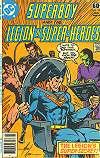 I
hesitate to include this because this was published at a time when DC was
experimenting with more pages, sometimes resulting in longer stories or,
like here, two separate, more-or-less feature-sized stories in an issue
(one 20 pages and the other 14 pages). My own rule was to not include double-sized
stories, but this isn't...this is just two regular-sized stories, and each
one is sufficiently good on its own that, combined, they makes this a noteworthy
issue. The first has Superboy (back when he was Superman-as-a-teen and
hanging in the future with a 30th Century super-hero team) suspecting that
his team mates are secretly brainwashing him, but for what reason, he doesn't
know. It's a nice adventure, with a nice core of sinister paranoia (no,
no, it doesn't turn out they're planning a surprise birthday party or anything),
some memorable character bits (a downcast Cosmic Boy expressing reservations
about what they're doing) and a good "revelation" ending, all delivered
by Paul Levitz and artist Mike Grell (an uneven artist, but here in top
form), both of who had a past association with the book, and were pinch
hitting here (Levitz would later return as regular writer). The "back up"
tale, by Conway and the under-appreciated Tuska, has members of the Legion
on trial, while, through flashbacks and differing perspectives, we see
what led to the trial. It's an interesting narrative structure, well-handled
(albeit, one has qualms with the cavalier way the characters need to kill
a creature in order to extract a medicinal cure from it -- I guess "environmentalism"
was an abstract concept back then). The story hinges on injuries Wildfire
sustained at the end of the previous issue, but it's basically a self-contained
tale. Both artists are inked by Vince Colletta, a guy with more than his
share of villifiers, but his work here is sympathetic to the pencillers,
adding mood. These are well told, well paced stories, with some nice emotion
and clever plot twists.
I
hesitate to include this because this was published at a time when DC was
experimenting with more pages, sometimes resulting in longer stories or,
like here, two separate, more-or-less feature-sized stories in an issue
(one 20 pages and the other 14 pages). My own rule was to not include double-sized
stories, but this isn't...this is just two regular-sized stories, and each
one is sufficiently good on its own that, combined, they makes this a noteworthy
issue. The first has Superboy (back when he was Superman-as-a-teen and
hanging in the future with a 30th Century super-hero team) suspecting that
his team mates are secretly brainwashing him, but for what reason, he doesn't
know. It's a nice adventure, with a nice core of sinister paranoia (no,
no, it doesn't turn out they're planning a surprise birthday party or anything),
some memorable character bits (a downcast Cosmic Boy expressing reservations
about what they're doing) and a good "revelation" ending, all delivered
by Paul Levitz and artist Mike Grell (an uneven artist, but here in top
form), both of who had a past association with the book, and were pinch
hitting here (Levitz would later return as regular writer). The "back up"
tale, by Conway and the under-appreciated Tuska, has members of the Legion
on trial, while, through flashbacks and differing perspectives, we see
what led to the trial. It's an interesting narrative structure, well-handled
(albeit, one has qualms with the cavalier way the characters need to kill
a creature in order to extract a medicinal cure from it -- I guess "environmentalism"
was an abstract concept back then). The story hinges on injuries Wildfire
sustained at the end of the previous issue, but it's basically a self-contained
tale. Both artists are inked by Vince Colletta, a guy with more than his
share of villifiers, but his work here is sympathetic to the pencillers,
adding mood. These are well told, well paced stories, with some nice emotion
and clever plot twists.
"The Planet of No Life"
sc: Arnold Drake. art: Al McWilliams - Star Trek #50 - Gold Key, 1978
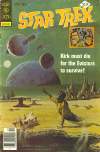 The
TV series Star Trek has seen many comic book incarnations, by many different
comic companies, and not too many would seem likely candidates for a "best
of" list -- especially Gold Key's. Yet this issue has always stuck with
me. The starship Enterprise comes upon a supposedly inhospitable planet
that's been settled by a nomadic people who the Enterprise had previously
encountered. The Enterprise had driven them away when they'd tried to reclaim
their ancestral planet which had since been populated by a new people (flashbacks
to an earlier issue -- which almost caused me to bump this as it threatened
my "self-contained" rule). Anyway, Captain Kirk finds the settlers torn
between trying to make a home on this new world, and radical militants
still bitter at the Enterprise for having deprived them of what they see
as their "real" home. Although I wasn't a big fan of McWilliam's art as
a kid, I like it more now: he captures the actors well enough, and models
the figures with shadow giving them a rounded, moody look. There are some
interesting conceptual scenes to the story -- particularly a certain eeriness
as Kirk and a crewman are exposed to the planet's lethal radiation, causing
their flesh to turn transparent, revealing the bones beneath. I'm not sure
what the scientific rational behind that was, but it was sure creepy as
a kid. The story has hints of real world issues (think of Israel, or Palestine,
or anytime you have two groups arguing over whose land is whose). But what
sticks with me is the portrayal of a supporting crewman, Lt. Jinz, recently
assigned to the Enterprise, who didn't want the position and whose story,
and human fraility, forms an emotional core of the issue. Sure, the story
is corny and scientifically suspect in spots, but Drake and McWilliams
do a decent job of making you think that this really could have
been an episode of the TV show -- which is kind of the goal, ain't it?
Although the portrayal of Scotty and McCoy are maybe a touch more belligerent
than in the series (in their attitudes toward Lt. Jinz).
The
TV series Star Trek has seen many comic book incarnations, by many different
comic companies, and not too many would seem likely candidates for a "best
of" list -- especially Gold Key's. Yet this issue has always stuck with
me. The starship Enterprise comes upon a supposedly inhospitable planet
that's been settled by a nomadic people who the Enterprise had previously
encountered. The Enterprise had driven them away when they'd tried to reclaim
their ancestral planet which had since been populated by a new people (flashbacks
to an earlier issue -- which almost caused me to bump this as it threatened
my "self-contained" rule). Anyway, Captain Kirk finds the settlers torn
between trying to make a home on this new world, and radical militants
still bitter at the Enterprise for having deprived them of what they see
as their "real" home. Although I wasn't a big fan of McWilliam's art as
a kid, I like it more now: he captures the actors well enough, and models
the figures with shadow giving them a rounded, moody look. There are some
interesting conceptual scenes to the story -- particularly a certain eeriness
as Kirk and a crewman are exposed to the planet's lethal radiation, causing
their flesh to turn transparent, revealing the bones beneath. I'm not sure
what the scientific rational behind that was, but it was sure creepy as
a kid. The story has hints of real world issues (think of Israel, or Palestine,
or anytime you have two groups arguing over whose land is whose). But what
sticks with me is the portrayal of a supporting crewman, Lt. Jinz, recently
assigned to the Enterprise, who didn't want the position and whose story,
and human fraility, forms an emotional core of the issue. Sure, the story
is corny and scientifically suspect in spots, but Drake and McWilliams
do a decent job of making you think that this really could have
been an episode of the TV show -- which is kind of the goal, ain't it?
Although the portrayal of Scotty and McCoy are maybe a touch more belligerent
than in the series (in their attitudes toward Lt. Jinz).
"The Cry of Night is - 'Kill!'"
sc: Mike Friedrich. art: Bob Brown, Joe Giella - Detective Comics #387 - DC Comics, 1969
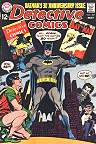 For
Batman's 30th anniversary, DC produced this reinterpretation of the very
first Bat-Man story, "The Case of the Chemical Syndicate", where the whole
idea was to blatantly update it to then-contemporary times, of student
radicals and social turmoil. The basic story remains the same -- someone's
killing members of a chemical research team -- but in this version, the
chief suspect is a hippy radical (a son of one of the scientists) who objected
to the project on political grounds. Commissioner Gordon and Robin are
convinced of his guilt, but Batman's not so sure -- this is a Liberal,
level-headed Batman who, if a movie had been made of this story, probably
could've been played by someone like Henry Fonda. Sure, it's obvious and
heavy handed, but there's some effective moodiness to the art and colour
(the story takes place all in one night), and I sometimes enjoy stories
that root themselves in their time and place. And I liked the extra dimension
given the story by the ideological debates/arguments between Batman and
Robin. This was later reprinted in Detective Comics #627, along
with the original story and two new interpretations by Marv Wolfman-Jim
Aparo and Alan Grant-Norm Breyfoygle -- and though Wolfman and Grant were
working with 22 pages each (as opposed to Friedrich's 17), Friedrich's
story still seemed to have more to it. The reprint, obviously, will be
cheaper to collect. It was also reprinted in an old Best of DC digest (#2,
featuring all-Batman stories -- a good collection).
For
Batman's 30th anniversary, DC produced this reinterpretation of the very
first Bat-Man story, "The Case of the Chemical Syndicate", where the whole
idea was to blatantly update it to then-contemporary times, of student
radicals and social turmoil. The basic story remains the same -- someone's
killing members of a chemical research team -- but in this version, the
chief suspect is a hippy radical (a son of one of the scientists) who objected
to the project on political grounds. Commissioner Gordon and Robin are
convinced of his guilt, but Batman's not so sure -- this is a Liberal,
level-headed Batman who, if a movie had been made of this story, probably
could've been played by someone like Henry Fonda. Sure, it's obvious and
heavy handed, but there's some effective moodiness to the art and colour
(the story takes place all in one night), and I sometimes enjoy stories
that root themselves in their time and place. And I liked the extra dimension
given the story by the ideological debates/arguments between Batman and
Robin. This was later reprinted in Detective Comics #627, along
with the original story and two new interpretations by Marv Wolfman-Jim
Aparo and Alan Grant-Norm Breyfoygle -- and though Wolfman and Grant were
working with 22 pages each (as opposed to Friedrich's 17), Friedrich's
story still seemed to have more to it. The reprint, obviously, will be
cheaper to collect. It was also reprinted in an old Best of DC digest (#2,
featuring all-Batman stories -- a good collection).
"A Midsummer's Nightmare"
sc: Ralph Macchio. art: Tom Sutton, P. Craig Russell - Dr. Strange (1970s series) #34 - Marvel Comics, 1979
 Dr.
Strange is abducted to the dreamplane by his old foe, the lord of dreams,
Nightmare, to battle Cyrus Black -- another, minor foe Nightmare has tutored
in order to give him the power to kill Strange. Yeah, on the surface it's
just an "old foe(s) seek revenge on hero" story -- but told with weird,
ethereal, head-tripping imagery by the unusual but brilliant art pairing
of Sutton and Russell, and abstract, semi-profound dialogue from Macchio.
Just what you want from a Doc Strange story. The conflict between Strange
and Black is intriguingly handled, emphasizing the difference between the
two -- even as Black seems the more powerful, Strange remains the more
confident, suggesting true strength is strength of character, not might.
Weirdly esoteric and, ultimately, just a little poignant.
Dr.
Strange is abducted to the dreamplane by his old foe, the lord of dreams,
Nightmare, to battle Cyrus Black -- another, minor foe Nightmare has tutored
in order to give him the power to kill Strange. Yeah, on the surface it's
just an "old foe(s) seek revenge on hero" story -- but told with weird,
ethereal, head-tripping imagery by the unusual but brilliant art pairing
of Sutton and Russell, and abstract, semi-profound dialogue from Macchio.
Just what you want from a Doc Strange story. The conflict between Strange
and Black is intriguingly handled, emphasizing the difference between the
two -- even as Black seems the more powerful, Strange remains the more
confident, suggesting true strength is strength of character, not might.
Weirdly esoteric and, ultimately, just a little poignant.
"The Circus of Lost Souls!"
sc: Len Wein. art: Sal Buscema, Ernie Chan - The Incredible Hulk #217 - Marvel Comics, 1977
 Wandering
the countryside, the chronically friendless Hulk befriends some carnival
misfits (a dog faced boy, a fat lady, etc.) on the run from an evil circus
(the Ringmaster's gang) -- all because they're trying to protect an enigmatic,
sickly young woman from the Ringmaster. By nature of the Hulk leaping about
from place to place, Hulk comics (at least circa the 1970s) probably offered
more relatively stand alone tales than a lot of titles -- still, this one
sticks out in my mind. It's a quintessentially melancholy, bittersweet
Hulk fable (though why Hulk doesn't turn back into Bruce Banner when he's
calm I'm not sure), buoyed by Wein's literary, almost poetic captions,
and the deft way he creates distinct personalities for the Hulk's travelling
companions with just a few lines of dialogue. Chan's inks over Buscema's
pencils add a lot of texture and elegance to the images (though he does
mute some of the primal energy one generally associates with Buscema's
depiction of jade jaws).
Wandering
the countryside, the chronically friendless Hulk befriends some carnival
misfits (a dog faced boy, a fat lady, etc.) on the run from an evil circus
(the Ringmaster's gang) -- all because they're trying to protect an enigmatic,
sickly young woman from the Ringmaster. By nature of the Hulk leaping about
from place to place, Hulk comics (at least circa the 1970s) probably offered
more relatively stand alone tales than a lot of titles -- still, this one
sticks out in my mind. It's a quintessentially melancholy, bittersweet
Hulk fable (though why Hulk doesn't turn back into Bruce Banner when he's
calm I'm not sure), buoyed by Wein's literary, almost poetic captions,
and the deft way he creates distinct personalities for the Hulk's travelling
companions with just a few lines of dialogue. Chan's inks over Buscema's
pencils add a lot of texture and elegance to the images (though he does
mute some of the primal energy one generally associates with Buscema's
depiction of jade jaws).
"Thou Shalt Not Covet Thy Neighbour's Planet!"
sc: Stan Lee. art: Gene Colan/Dan Adkins - Daredevil (1st series) #28 - Marvel Comics, 1967
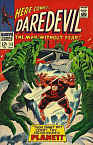 While giving a lecture as Matt Murdock at an upstate college
on the theoretical legal ramifications of extraterrestrials on earth, Daredevil
must thwart an alien invasion. Wuzzat? you say. Daredevil? Aliens? A great
story? But, y'know what...it is kind of. Daredevil wasn't always mired
in the doom n' gloom of mobsters n' mean streets. In this era he was a
more flippant, devil-may-care hero (hence dare-devil) and this is an entertaining,
if lightweight, tale, well told, with nice time out for the then current
character/soap opera-y stuff, and a nice building of mood and laying the
groundwork (a moody scene of a man walking through the snowy forest behind
the college); well paced making it all eminently readable. Strikingly rendered
by Colan's pencils, with Adkins a more suitable inker than some he was
paired with. Yeah, this isn't the gritty, post-Frank Miller Daredevil...but
it's an equally valid take on the character (moreso, actually, since Lee
created the character!). And, as I say, as a simple page turner...it's
an enjoyable read.
While giving a lecture as Matt Murdock at an upstate college
on the theoretical legal ramifications of extraterrestrials on earth, Daredevil
must thwart an alien invasion. Wuzzat? you say. Daredevil? Aliens? A great
story? But, y'know what...it is kind of. Daredevil wasn't always mired
in the doom n' gloom of mobsters n' mean streets. In this era he was a
more flippant, devil-may-care hero (hence dare-devil) and this is an entertaining,
if lightweight, tale, well told, with nice time out for the then current
character/soap opera-y stuff, and a nice building of mood and laying the
groundwork (a moody scene of a man walking through the snowy forest behind
the college); well paced making it all eminently readable. Strikingly rendered
by Colan's pencils, with Adkins a more suitable inker than some he was
paired with. Yeah, this isn't the gritty, post-Frank Miller Daredevil...but
it's an equally valid take on the character (moreso, actually, since Lee
created the character!). And, as I say, as a simple page turner...it's
an enjoyable read.
"Waiting for God (oh!)"
sc: Rick Veitch. art: Alfredo Alacla - Swamp Thing (2nd series) #79 - DC Comics, 1988
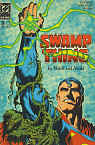 Strangely, this isn't here as a Swamp Thing tale...but
as a Superman tale. Supes guest stars as Swampy comes to Metropolis
looking to kill Lex Luthor (as revenge for a previous adventure). And Veitch
basically uses the tale as a quirky, low-key, exploration of Superman,
his character, his place in society, even his abilities (with some nicely
off beat, Bronze Age-style scenes of Supes using his powers unobtrusively
while his alter ego, Clark Kent, is attending a press conference).
Strangely, this isn't here as a Swamp Thing tale...but
as a Superman tale. Supes guest stars as Swampy comes to Metropolis
looking to kill Lex Luthor (as revenge for a previous adventure). And Veitch
basically uses the tale as a quirky, low-key, exploration of Superman,
his character, his place in society, even his abilities (with some nicely
off beat, Bronze Age-style scenes of Supes using his powers unobtrusively
while his alter ego, Clark Kent, is attending a press conference).
Untitled
sc: Robert Kirkman. art: Cory Walker - Invincible #5 - Image Comics, 2004
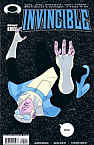 I'm mixed on what I've read of Invincible, feeling it
still has trouble shaking off its roots as a self- reflective fanboy homage
enough to really exist on its own -- and prone to juvenile bursts of ultra
gory violence. Still, I think this issues works quite well, expressing
a lot of what Kirkman's trying to do in one issue. Invincible is a second
generation super hero, and when dad's away, Invincible has to fly out to
space to intercept a super powered alien. It nicely juggles the series'
themes (novice hero, learning to fill the old man's booties) with an action
piece, that actually resolves cleverly (some of the other issues tend to
have the super hero stuff take place off camera, or be fight scenes devoid
of context/plot) and where the violence is "clean" (the series got bloodier
as it went). It's amusing and light-hearted, and kind of fun. And the scene
where Invincible looks around in space is almost worth the read on its
own. Yeah, it's a slight story, but an enjoyable one.
I'm mixed on what I've read of Invincible, feeling it
still has trouble shaking off its roots as a self- reflective fanboy homage
enough to really exist on its own -- and prone to juvenile bursts of ultra
gory violence. Still, I think this issues works quite well, expressing
a lot of what Kirkman's trying to do in one issue. Invincible is a second
generation super hero, and when dad's away, Invincible has to fly out to
space to intercept a super powered alien. It nicely juggles the series'
themes (novice hero, learning to fill the old man's booties) with an action
piece, that actually resolves cleverly (some of the other issues tend to
have the super hero stuff take place off camera, or be fight scenes devoid
of context/plot) and where the violence is "clean" (the series got bloodier
as it went). It's amusing and light-hearted, and kind of fun. And the scene
where Invincible looks around in space is almost worth the read on its
own. Yeah, it's a slight story, but an enjoyable one.
"Robin's Revenge"
sc: unbilled (Cary Bates). art: unbilled (Curt Swan, Jack Abel) - World's Finest #184 - DC Comics, 1969
 In the 1960s, DC used to do occasional "imaginary stories"
inserted into their regular comics (Marvel later came up with a regular
comic -- What if...? -- for such stories and, still later, DC came up with
an entire line -- Elseworlds). Some of those early imaginary stories, though
fun, reflect the juvenileness of their era, but this, from the late 1960s,
seems to benefit from a slight sophistication. While seeking to capture
a criminal, Batman is killed, leaving Robin to vow revenge, but it's not
till years later that an adult Robin, and a greying Superman, encounter
a villain who may be the foe. There's just a lot of neat stuff here, albeit
some which has been dulled in the ensuing years by repetition (at the time,
I'm not sure anyone had done a greying Superman before!) but there's just
neat conceptual stuff, like the adult Robin's costume, or the near future
setting in which some of the story takes place. The story is well-paced,
with some solid dialogue and character stuff (like the aging Superman's
heroism undaunted by his waning prowess) -- all told in 16 pages. Most
Elseworlds stories were at least 48 pages or more and, as I said, aren't
half as memorable, or emotional. And the art is highly effective. Curt
Swan's low-key realism also adds a sense of sophistication to the story
-- and there's actually an even more dynammic, and stylish composition to
the scenes than I often associate with Swan (and I'm a big Swan fan, so
I'm not trying to be too pejorative). Maybe he was just really inspired
by the plot. This issue also featured a 1950s Martian Manhunter reprint
as a back-up story.
In the 1960s, DC used to do occasional "imaginary stories"
inserted into their regular comics (Marvel later came up with a regular
comic -- What if...? -- for such stories and, still later, DC came up with
an entire line -- Elseworlds). Some of those early imaginary stories, though
fun, reflect the juvenileness of their era, but this, from the late 1960s,
seems to benefit from a slight sophistication. While seeking to capture
a criminal, Batman is killed, leaving Robin to vow revenge, but it's not
till years later that an adult Robin, and a greying Superman, encounter
a villain who may be the foe. There's just a lot of neat stuff here, albeit
some which has been dulled in the ensuing years by repetition (at the time,
I'm not sure anyone had done a greying Superman before!) but there's just
neat conceptual stuff, like the adult Robin's costume, or the near future
setting in which some of the story takes place. The story is well-paced,
with some solid dialogue and character stuff (like the aging Superman's
heroism undaunted by his waning prowess) -- all told in 16 pages. Most
Elseworlds stories were at least 48 pages or more and, as I said, aren't
half as memorable, or emotional. And the art is highly effective. Curt
Swan's low-key realism also adds a sense of sophistication to the story
-- and there's actually an even more dynammic, and stylish composition to
the scenes than I often associate with Swan (and I'm a big Swan fan, so
I'm not trying to be too pejorative). Maybe he was just really inspired
by the plot. This issue also featured a 1950s Martian Manhunter reprint
as a back-up story.
"The Great Space-Travel Hoax"
sc: Cary Bates. art: Curt Swan, Frank Chiaramonte - Action Comics #509 - DC Comics, 1980
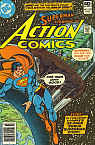 When too many modern Superman comics I pick up seem like
just extended, mindless fight scenes, a story like this just grows in my
estimation. Yeah, there's action -- but to support the story, not swamp
it, as Supes battles a weird creature attempting to sabotage a rocket launch
and finds it has a connection to a fringe group that claims all space travel
is a hoax. The story keeps you wondering where it's headed, and has a memorable
solution, and is one where Supes is willing to duke it out with the best
of 'em...but, ultimately, would rather solve things with reason and compassion,
who even articulates that he tends to assume a person is non-threatening,
until otherwise proven. And, of course, there's that ol' Curt Swan art.
The comic also included a twenty-eight page bonus story (yeah, a bonus
story that's longer than the feature) that was basically an ad for a line
of computers, as Supes' thinking processes are sabotaged by Major Disaster,
and he must rely on some school kids and their computers to help him calculate
speed/trajectories/etc. in order to use his super powers. Though written
by Bates and drawn by Jim Starlin and Dick Giordano, it's not really very
memorable.
When too many modern Superman comics I pick up seem like
just extended, mindless fight scenes, a story like this just grows in my
estimation. Yeah, there's action -- but to support the story, not swamp
it, as Supes battles a weird creature attempting to sabotage a rocket launch
and finds it has a connection to a fringe group that claims all space travel
is a hoax. The story keeps you wondering where it's headed, and has a memorable
solution, and is one where Supes is willing to duke it out with the best
of 'em...but, ultimately, would rather solve things with reason and compassion,
who even articulates that he tends to assume a person is non-threatening,
until otherwise proven. And, of course, there's that ol' Curt Swan art.
The comic also included a twenty-eight page bonus story (yeah, a bonus
story that's longer than the feature) that was basically an ad for a line
of computers, as Supes' thinking processes are sabotaged by Major Disaster,
and he must rely on some school kids and their computers to help him calculate
speed/trajectories/etc. in order to use his super powers. Though written
by Bates and drawn by Jim Starlin and Dick Giordano, it's not really very
memorable.
"American Dreamer"
sc: Ann Nocenti. art: Barry Windsor-Smith - Daredevil (1st) #236 - Marvel Comics, 1986
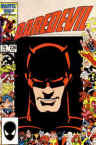 The Black Widow is assigned to track down and neutralize
an AWOL government-bred super soldier who may be having a breakdown and
her ex-partner/lover, Daredevil, comes along. The concepts (super soldiers,
government black ops) and themes (the dehumanizing effects of post-traumatic
stress) aren't anything new, but maybe that shows why this story is memorable,
because it's in the telling that it stands out, with Nocenti's thoughtful,
compassionate approach to characters and dialogue (the super soldier is
an equal character, not just a plot device). It's well paced and there's
action, but it's not an "action" story, per se. Beautiful, top drawer Windsor-Smith
art -- I like Smith's work, but can sometimes find in its hyper-linework
it can be a little aloof, but here the characters are expressive, the use
of panel composition enhancing to the narrative.
The Black Widow is assigned to track down and neutralize
an AWOL government-bred super soldier who may be having a breakdown and
her ex-partner/lover, Daredevil, comes along. The concepts (super soldiers,
government black ops) and themes (the dehumanizing effects of post-traumatic
stress) aren't anything new, but maybe that shows why this story is memorable,
because it's in the telling that it stands out, with Nocenti's thoughtful,
compassionate approach to characters and dialogue (the super soldier is
an equal character, not just a plot device). It's well paced and there's
action, but it's not an "action" story, per se. Beautiful, top drawer Windsor-Smith
art -- I like Smith's work, but can sometimes find in its hyper-linework
it can be a little aloof, but here the characters are expressive, the use
of panel composition enhancing to the narrative.
"To Become an Immortal!"
sc: Stan Lee. art: Jack Kirby, Vince Colletta - Thor (1st series) #136 - Marvel Comics, 1967
 A story that was presumably just cobbled together in order
to write Jane Foster -- Thor's human girlfriend -- out of the series and
make way for more mythological tales, and the Asgardian love interest,
Sif. Yet it actually emerges as an intriguing, perhaps challenging tale
as the reader is basically shown what super heroes (and gods) would really
seem like from a real person's perspective if they were truly confronted
by demons and monsters and super beings. Thor takes Jane to Asgard as part
of their courtship and Jane is confronted by a bizarre reality that Thor
considers home, that his readers saw as fun entertainment...but in reality,
to a real person, seems almost "mad". Lots of comics have had hero's girlfriends
leave because they couldn't cope with their life style -- here, you really
sympathize with why. This was reprinted in Thor #32 (the 1990s-2000s
series).
A story that was presumably just cobbled together in order
to write Jane Foster -- Thor's human girlfriend -- out of the series and
make way for more mythological tales, and the Asgardian love interest,
Sif. Yet it actually emerges as an intriguing, perhaps challenging tale
as the reader is basically shown what super heroes (and gods) would really
seem like from a real person's perspective if they were truly confronted
by demons and monsters and super beings. Thor takes Jane to Asgard as part
of their courtship and Jane is confronted by a bizarre reality that Thor
considers home, that his readers saw as fun entertainment...but in reality,
to a real person, seems almost "mad". Lots of comics have had hero's girlfriends
leave because they couldn't cope with their life style -- here, you really
sympathize with why. This was reprinted in Thor #32 (the 1990s-2000s
series).
"Who Has Been Lying in My Grave?"
sc. Arnold Drake. art: Carmine Infantino, George Roussos - Strange Adventures #206 - DDC Comics, 1969
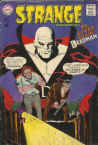 I normally want to stay away from origin issues, as it's
a bit of a cheat (self-contained, one issue origins, are probably more
inclined to be better than average stories, plot-wise). But I just really
like this issue. In fact, I really dig most of the 1960s run of Deadman
stories. Ironically, this isn't drawn by the Neal Adams (who did most of
the run) but by Carmine Infantino -- and whose work looks particularly
rough under Roussos crude inks. But there's no doubting Infantino has a
good eye for scene composition, and creates some memorable images here.
And Drake's story about a cynical, rough-edged circus star who dies, but
is given a chance to return as a ghost by Rama Kushna, an eastern deity,
is bold and angry and just a little weird. Deadman is a vibrant, raw personality
(he would be muted in later years), given some nice, snappy dialogue; the
circus milieu is off-beat; some of the scenes are exceptional -- the surreal
sequence where Rama Kushna's voice emanates from various animals, the poignant
scene of Tiny by the grave; etc. And the use of Eastern mysticism just
gives it a weird, ethereal edge that DC would later shy away from (later
retcons had Rama Kushna, here described as the "face of the universe",
downgraded to a minor supernatural force as DC tried to unify its reality
under one -- I guess Judeo-Christian -- mythology). It was reprinted as
part of the 1st issue of a 7 issue deluxe format, 1985 Deadman reprint
series...as well as included in the expensive, hardcover Deadman collection.
I normally want to stay away from origin issues, as it's
a bit of a cheat (self-contained, one issue origins, are probably more
inclined to be better than average stories, plot-wise). But I just really
like this issue. In fact, I really dig most of the 1960s run of Deadman
stories. Ironically, this isn't drawn by the Neal Adams (who did most of
the run) but by Carmine Infantino -- and whose work looks particularly
rough under Roussos crude inks. But there's no doubting Infantino has a
good eye for scene composition, and creates some memorable images here.
And Drake's story about a cynical, rough-edged circus star who dies, but
is given a chance to return as a ghost by Rama Kushna, an eastern deity,
is bold and angry and just a little weird. Deadman is a vibrant, raw personality
(he would be muted in later years), given some nice, snappy dialogue; the
circus milieu is off-beat; some of the scenes are exceptional -- the surreal
sequence where Rama Kushna's voice emanates from various animals, the poignant
scene of Tiny by the grave; etc. And the use of Eastern mysticism just
gives it a weird, ethereal edge that DC would later shy away from (later
retcons had Rama Kushna, here described as the "face of the universe",
downgraded to a minor supernatural force as DC tried to unify its reality
under one -- I guess Judeo-Christian -- mythology). It was reprinted as
part of the 1st issue of a 7 issue deluxe format, 1985 Deadman reprint
series...as well as included in the expensive, hardcover Deadman collection.
"..And a Phoenix Shall Arise!"
sc: Roy Thomas & Tony Isabella. art: Sal Buscema, J. Tartag&G.Roussos- Captain America (1st series) #168 - Marvel Comics, 1974
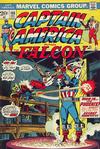 Amidst Steve Englehart's well regarded tenure on the comic, came this filler by Thomas & Isabella, as Cap (and partner the Flacon) finds himself targeted by the villainous Phoenix (no relation to the later X-Men character), who presents himself as an old enemy--yet who Cap doesn't recognize. Well paced, with enough intrigue in that hook alone, and it's pure comic book hokey with lots of action and an archetypal comic booky death trap...yet is elevated by some character insight and thoughtful rumination as Cap broods and ponders and reflects, building to a pathos-tinged finale. Making it pure pulp fiction...with pretentious undercurrents, or is that pretentious drama with a pulp fiction patina? Either way, it's both fun and thoughtful. What a good comic should be. Sal Buscema's art was well served by the inkers, too.
"My Killer, the Car!"
sc: Len Wein. art: Ross Andru, Mike Esposito - The Amazing Spider-Man #160 - Marvel Comics, 1976
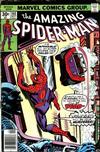 As I've kind of indicated, some of these stories I pick are great, profound, thoughtful tales exposing the human soul...and some are just fluffy super hero adventures, well told. And this falls squarely in the latter camp. I mean, a story where Spider-Man finds himself being stalked by his own Spider-Mobile -- a vehicle that, itself, was first introduced as a kind of spoof -- wouldn't seem like a likely contender for "great" anything. But it's an oddly effective, suspenseful little effort. Spidey had written off his unwanted vehicle after it previously ended up at the bottom of the Hudson river...but suddenly, it's back, and trying to run him down. The story is well paced, broken up with character scenes, and, though referencing some on going story lines, is well enough self-contained. But it's in the action scenes themselves that it excels, as scripter Wein and, perhaps even more significantly, artists Andru and Esposito (in a peak period of their work on Spidey) really create suspense and mood, as headlights leer creepily out of the fog, and the car can pursue him even up buildings! No, it's not a brain teaser...but a nicely told page turner in the vein of the novel Christine and the movie The Car.
"Batman--Dragon Slayer??"
sc: Bob Haney. art: Jim Aparo - The Brave and the Bold (1st series) #132 - DC Comics, 1977
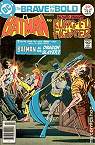 Batman teams with Richard Dragon, Kung Fu Fighter (after a brief tussle between the two) when Dragon finds himself the target of an assassin...possibly relating to a shabby old man Dragon once helped who turned out to be a reclusive billionaire and who, recently deceased, bequeathed Dragon a mysterious key. Okay, I can't divorce my feelings for this from purely subjective nostalgia, as it may be one of the earliest comics (I remember) reading. And the story can be a bit abruptly told -- but that kind of reflects Haney's no nonsense storytelling on B&B where most issues crammed entire plots into single issues (and rarely fell back on the narrative shorthand of super villains or recurring foes). There's lots of snappy dialogue (from Batman yet!), and some nice ironic twists toward the end, and nuances to the assassin's character. And it's beautifully illustrated by Aparo in, arguably, his peak period -- nice composition and moody use of shadow. Indeed, this may arguably be the best drawn Richard Dragon story ever -- and that's counting his own comic (Haney makes him more philosophical than I think he tended to be in his own series, too). Perhaps one of the biggest appeals is simply the core hook of the chance encounter with the eccentric billionaire which was so obviously inspired by the real life Melvin Dummar/Howard Hughes incident/controversy (dramatized in the movie "Melvin and Howard"). There's something appealing about a super hero comic that's so rooted in its era and taking inspiration from the real world. All these little things combine...to make a memorable little tale.
"Falling!"
sc: Stefan Petrucha. art: Charles Adlard - The X-Files (1st series) #14 - Topps Comics, 1996
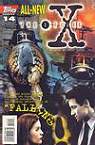 Unlike a lot of TV-to-comics properties, I'd argue Stefan Petrucha could write stories as good, even better, than the TV series. Here he mixes themes of UFOs and government conspiracies with Lord of the Flies for a memorable, chilling effect. While investigating reports of a crashed flying saucer, Mulder is captured by some local kids who think he's the alien (a clever bit of turnabout on the series' themes) and the ringleader of the kids may not be entirely sane. Meanwhile Scully is being kept out of the area by a government cordon and worries of radiation contamination. It's a clever, unsettling little tale, positing that sometimes the alien monsters...aren't aliens, and utilizing the series recurring themes, while still seeming fresh. Charles Adlard's raw art is nicely expressive and the colours, deceptively bright and vibrant, actually add to the moodiness.
"Planet Where Time Stood Still!"
sc: Mike W. Barr (co-story Dick Riley). art: Frank Miller, Bruce Patterson - Marvel Spotlight (2nd series) #8 - Marvel Comics, 1980
 Marvel Spotlight was one of those showcase/try-out comics for characters without a regular title. In this case, Captain Marvel (Mar-vell, the Kree warrior turned protector of the universe) had had his own comic cancelled a little before, and was given the first four issues of this series...then returned for the 8th issue in this nice, stand alone one-shot tale. As much science fiction as super hero, when some earth scientists vanish, Mar-vell tracks them to a mysterious, silent planet. It's a moody, somewhat eerie tale, with Barr effectively capturing the essence of the dichotomy of Mar-vell's personality -- the warrior, and the cosmically aware philosopher. But the visuals make the story as well -- and I suspect inker Patterson (who also coloured and lettered) was as much responsible as penciller Frank Miller. Miller delivers some nice storytelling and composition...but the surreal head trippy landscape, and the level of detail to the figures and backgrounds, and the use of moody shadow, is a far cry from Miller's Spartan, more familiar work then on Daredevil (paired with inker Klaus Janson), suggesting Patterson may've been embellishing. Atmospheric and memorable.
...on to Page 3
...back to Page 1
Back to my They Ain't TPBs...but They Should Be (great story arcs) section
Back to the Masked Bookwyrm's
Graphic Novel and TPB Reviews main page